

Sarawak: A Gospel Story on a Multiethnic Land
The first Methodist Church: Sing Ang Tong
Introduction: From a Frontier Colony to a Christian-Majority State
When the 10th Chinese Congress on World Evangelization (CCCOWE) takes place in Sarawak, we are stepping into a truly unique mission field. Among the 13 states of Malaysia, Sarawak is the only one where Christians make up more than half of the population. Located in the northwest of Borneo, about 51% of its people today identify as Christians (including both Catholics and Protestants), with a total of over 1.25 million believers. This spiritual landscape did not emerge overnight. Rather, it is the fruit of nearly 180 years of missionary work, the convergence of multiple denominations, indigenous revival movements, and ongoing processes of localization. From a remote frontier under the rule of the “White Rajahs” (a title meaning “king”), to today’s diverse communities marked by mutual care and unity, the church in Sarawak bears witness to how the gospel has taken root in the tropical rainforest, transformed headhunting cultures, and brought blessing to education, healthcare, and social harmony.
I. The Land and History of Borneo: An Island of Converging Faiths
Borneo is the third-largest island in the world, covering more than 740,000 square kilometers. It is shared by Indonesia (Kalimantan), Malaysia (Sarawak and Sabah), and Brunei. The island is characterized by tropical rainforests, mountain ranges, and extensive river systems, and is home to over 50 indigenous ethnic groups, including the Banjar, Kadazan-Dusun, Iban, Malay, and Orang Ulu peoples, with a total population of about 23 million.
Historically, Borneo has been a crossroads of religions. Between the 8th and 13th centuries, the Srivijaya Empire introduced Buddhism. From the 14th to 15th centuries, the Majapahit Empire brought Hindu influences. After the 15th century, the expansion of the Brunei Sultanate spread Islam. In the 18th century, Chinese miners migrated to the region for gold mining and trade; from 1777 to 1795, the Lanfang Republic governed Chinese settlements. In 1841, the British adventurer James Brooke defeated pirates and was appointed “Rajah of Sarawak” by the Sultan. During the Brooke dynasty (1841–1946), the family introduced British administrative systems and the rule of law, and gradually abolished slavery, paving the way for the arrival of Christianity. Within this colonial context, beginning in 1848, the gospel flowed into the land like three converging rivers, bringing life to its people.
Sarawak, located in the northwest of Borneo, makes up about 16% of the island’s land area. Its capital, Kuching, is known for its rich biodiversity and cultural diversity. Historically, inland communities lived in scattered longhouses, connected by dangerous rivers, with malaria widespread and headhunting practices common. Yet it was precisely in such conditions that the church did more than preach the gospel—it became an agent of transformation, helping to end harmful customs, promote ethnic harmony, and serve as a pillar of society.
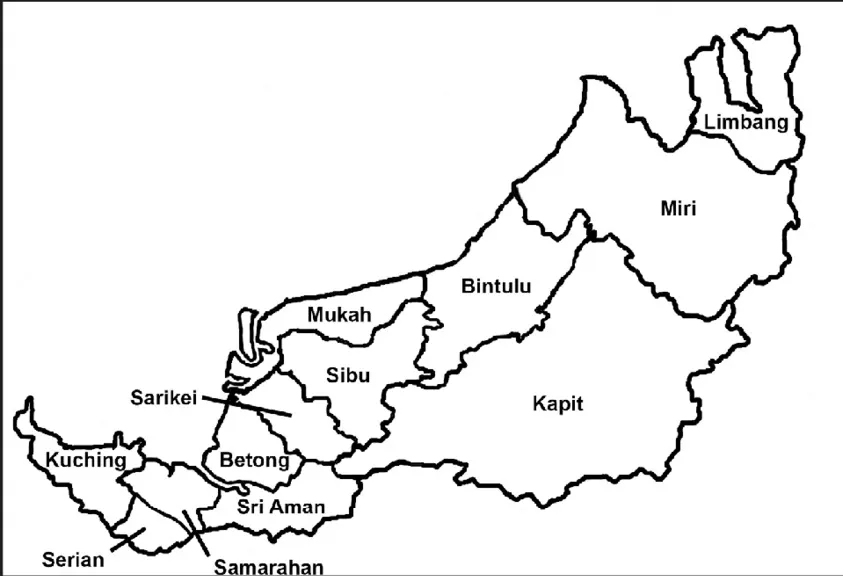
Districts of Sarawak
II. The Sowing of the Gospel: Early Missionary Pioneers (1848–1928)
The church in Sarawak traces its origins to three key missionaries. Despite barriers of language, culture, and environment, these pioneers laid the foundations for different denominations that continue to shape the region today.
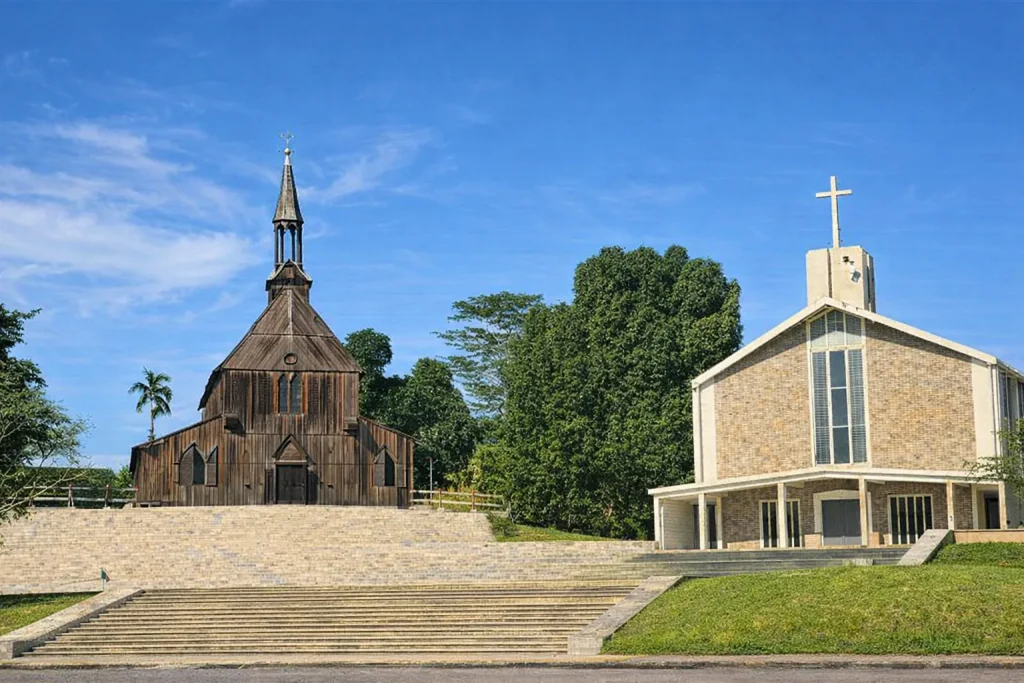
The new and old St. Thomas Cathedral
1. Anglican Church: The First Seed in Raj of Sarawak (1848)
On June 29, 1848, Anglican missionary Francis Thomas McDougall (1817–1866), together with his wife, arrived in Kuching at the invitation of the Brooke Rajah. This marked the establishment of the first formal Christian denomination in Sarawak. McDougall, both a clergyman and a medical doctor, founded the first Anglican church in Kuching—St. Thomas’s Church, later elevated to St. Thomas’s Cathedral. He also established schools and clinics. His ministry initially focused on Europeans and Chinese communities, before extending to the Dayak people. In 1855, the Diocese of Labuan (which included Sarawak) was established, with McDougall as its first bishop. By 1898, there were over 100 schools and 20 churches. The Anglican Church, with its strong emphasis on liturgy and education, became a spiritual pillar during the era of the White Rajahs.
2. Catholic Church: Deep Roots in Education and Indigenous Communities (1881)
In July 1881, three priests from the Mill Hill Mission were granted permission to enter Kuching, where they were warmly received by the Rajah. Overcoming the challenges of dense jungles and difficult terrain, they established mission stations, schools, and medical outposts. By 1895, there were eight mission stations, including Kuching, Kanowit, Labuan, and Sandakan. Between 1901 and 1902, they began missionary and educational work in Sibu. Their ministry reached not only the Dayak communities but also a significant number of Chinese believers.
3. Methodist Church: A Faith Community Among Chinese Immigrants (1901)
In 1901, Wong Nai Siong, a leader from the Methodist Church in Fuzhou, China, led 1,118 believers to Sibu to escape persecution in the late Qing Dynasty. On March 17, they held a thanksgiving service by the Sungai Merah (Red River), where 12 people were baptized—marking the birth of the Methodist Church in Sarawak. In 1903, American missionaries James Hoover and G. V. Summers arrived, establishing schools and rice farms to serve the Fuzhou farming community. From 1939 onward, the mission expanded to the Iban people. The Methodist Church established its Annual Conference in 1959, followed by a separate Iban Annual Conference in 1962. By 1968, it had become self-governing, self-supporting, and self-propagating, reflecting a mature and locally rooted church.
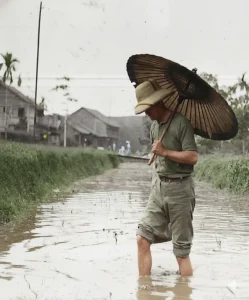
James Hoover on a rice farm
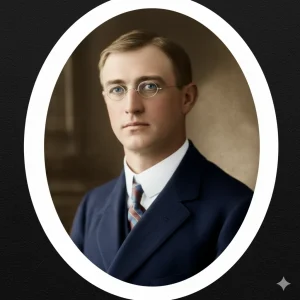
James Hoover
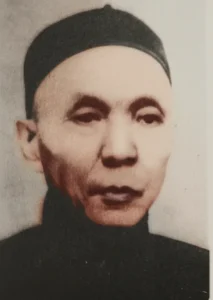
Wong Nai Siong
Ⅲ. A Wave of Indigenous Revival: Reaching the Interior (1928–1960)
In 1928, three young missionaries from the Australian Borneo Evangelical Mission (BEM)—Hudson Southwell, Frank Davidson, and George Hudson—ventured into the northern interior of Sarawak to preach the gospel among the Kelabit and Lun Bawang (Lun Dayeh) peoples. Traveling on foot through dense rainforest, they used direct translations of Scripture and oral storytelling to share the gospel. This led to a powerful revival movement. By 1958, BEM had become locally rooted and was renamed Sidang Injil Borneo (SIB). SIB emphasized husband-and-wife ministry teams, charismatic worship, and the abandonment of headhunting practices (symbolized by crosses placed at the entrances of longhouses). Today, it has grown to over 200,000 believers, mainly among the Orang Ulu communities. After World War II, its ministry expanded into urban areas, reaching both Chinese populations and indigenous peoples who had migrated to the cities. In 2020, the English name “Borneo Evangelical Mission (BEM)” was reinstated.
Other developments during this period include the founding of GKKB (West Kalimantan Christian Church) in 1906, Baptist work beginning in 1914, and the emergence of independent churches in 1956. Although World War II (1941–1945) brought widespread destruction to churches, the postwar rebuilding period accelerated the rise of local leadership. For example, Rev. Percy King (1911–2005) led the growth of SIB to 400 congregations. In 1963, Sarawak joined the formation of Malaysia. Despite facing pressures from Islam, the church flourished under provisions for religious freedom, and Christians grew from a minority into a dominant presence in society.
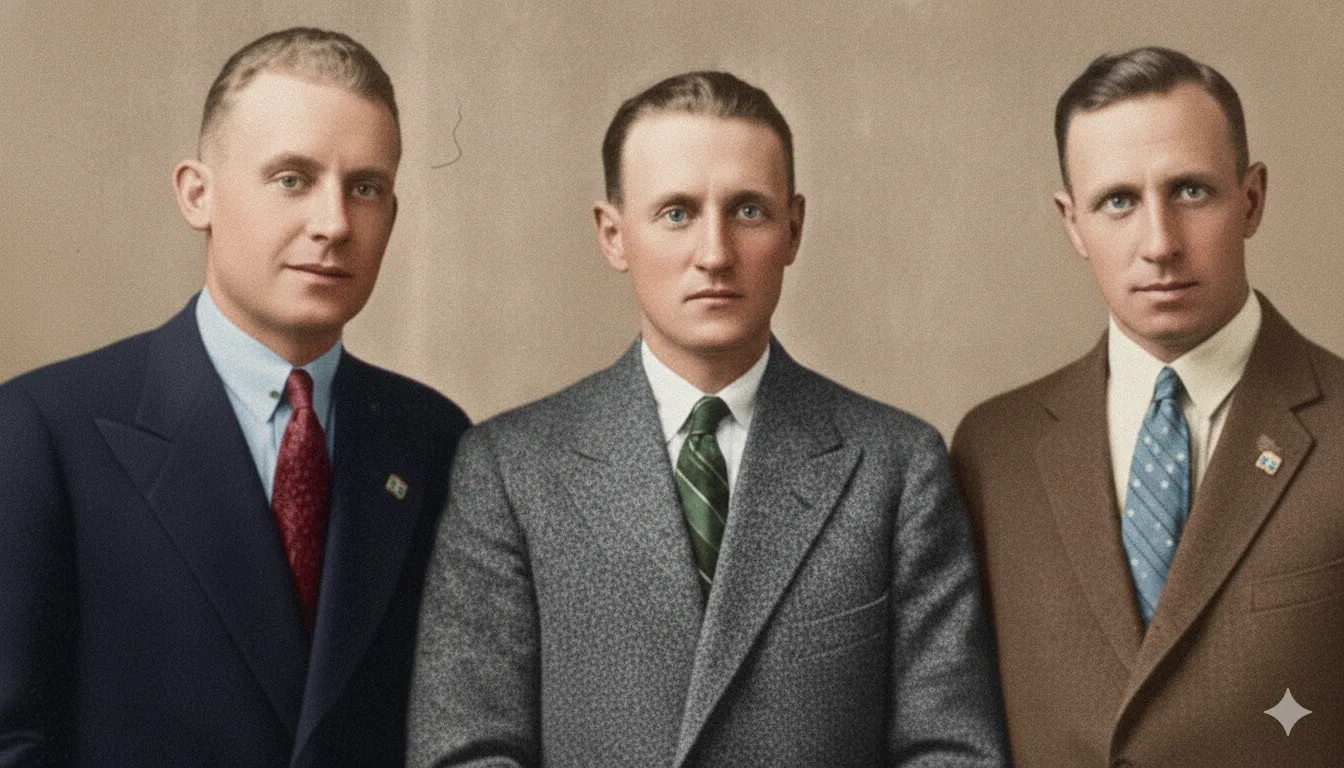
The three BEM missionaries
Ⅳ. Localization and Diverse Growth: The Era of Autonomy (1960–2025)
From the 1960s onward, the church in Sarawak entered a stage of maturity and expansion:
- Anglican Church: Now has about 250,000 members, with 258 churches and 10 primary, secondary, and kindergarten institutions. It continues to place strong emphasis on education ministry.
- Catholic Church: In 1976, Kuching was elevated to an Archdiocese, overseeing Catholic work in East Malaysia. In 2008, Kota Kinabalu was also elevated to an Archdiocese, serving Sabah. Today in Sarawak, the Catholic Church operates 41 schools in Kuching (with 210,000 members), 32 schools in Sibu (120,000 members), and 10 schools in Miri (100,000 members), totaling about 650,000 believers. The Catholic Church is deeply engaged in social services, reaching remote longhouse communities, transforming traditional funeral practices, and contributing to education, healthcare, and the preservation of indigenous cultures.
- Methodist Church: Became autonomous in 1968 and was officially recognized by the state legislature in 1988 as a local religious body. From the 1980s, it expanded its ministry to Sabah, Australia, and New Zealand, and later to Papua New Guinea and the Solomon Islands. Today it is organized into Chinese and Iban Annual Conferences, with about 200,000 members.
- SIB (now reinstated to the name BEM): Has expanded beyond Sarawak into Sabah and Peninsular Malaysia, with more than 250,000 members today.
- Emerging Denominations: From the 1970s to 1980s, additional churches were established in Sarawak. These include Miri Gospel Chapel (1963), founded by Australian missionary Rev. Percy King (1911–2005); the Baptist Church (1970), established in Kuching by American missionaries Bob and Dorothy Evans; Blessed Church (1982); Full Gospel Church (1984); City Harvest Church (1997); 611 Bread of Life Church (2001); and Good News Fellowship (2018).
Ⅴ. The Church’s Blessing to Sarawak: Education, Healthcare, and Social Transformation
Missionaries brought a holistic gospel that touched every area of life:
- Education: The Anglican Church established about 100 schools, the Catholic Church 83, and the Methodist Church 20. These institutions nurtured local leadership and were later handed over to the government, contributing significantly to improved literacy rates.
- Healthcare: From McDougall’s clinic to BEM’s mobile medical services, and Methodist hospitals and agricultural projects, these efforts helped combat diseases like malaria and improve public health.
- Social Transformation: The church played a key role in ending headhunting practices, reforming funeral customs, and promoting family values. The Methodist Church contributed to the development of Sibu’s rice economy, while SIB served urban migrants and workers in oil-producing regions. In many longhouses, Christian worship replaced traditional rituals such as the Miring (spirit-offering ceremony).
Today, Christians in Sarawak outnumber Muslims, and the state enjoys a relatively high degree of religious freedom. The church continues to foster unity across ethnic groups—for example, through Iban longhouse worship and Chinese associations in both urban and rural areas. During the pandemic, churches demonstrated resilience by moving gatherings online and continuing to care for their communities.
Ⅵ. Distinctives of the Faith: Cultural Integration and a Watchful Spirit
Christianity in Sarawak was first introduced from outside, but has since taken deep root locally:
- Ethnic Distribution: Many Iban and Bidayuh believers are found in Anglican and Catholic churches; the Orang Ulu are largely associated with SIB; while Chinese communities are strongly connected to the Methodist Church.
- Forms of Worship: Worship often takes place in longhouses, where entire households gather together. The Bible and hymns are available in the Iban language, and traditional festivals such as Gawai Dayak are still observed, sometimes incorporating indigenous music and drums.
- Mission Model: Since 1968, churches have emphasized the “Three-Self” principles (self-governing, self-supporting, self-propagating). Husband-and-wife ministry teams are common, and there is strong commitment to training local indigenous pastors. From the 1960s until today, the Methodist Church alone has sent over 60 missionaries to more than 10 regions both locally and overseas.
- Spiritual Character: Marked by humility, dedication, and a strong sense of stewardship over the land, the church often functions as a community center. Multiple languages—such as Iban, Mandarin, English, and Malay—coexist within worship and ministry.
In recent years, growth has been especially rapid, with 228 new churches established between 2020 and 2025. This reflects a vibrant and holistic mission witness: in a land where Buddhism, Hinduism, and Islam have long intersected, the Christian faith has become a mainstream force, bringing blessing to a multiethnic society.
Conclusion: The Missional Vision of CCOWE
From a small seed on the margins to a rich harvest today, the church in Sarawak invites us to reflect: how can the gospel take root in diverse cultural contexts? Within the global Chinese evangelical movement, this land offers valuable lessons—deep investment in education, indigenous revival, and intentional localization. May all participants of this conference be blessed here, and as they return to their own contexts, carry with them these gospel stories and continue the watchful mission.
References
- 朱峰,《基督教與海外華人的文化適應—近代東南亞華人移民社區的個案研究》,中華書局,2009年。
- 黃建淳,《砂拉越華人史研究》,東大圖書館,1999年。
- 饒尚東、田英成,《砂𦛨越華族研究論文集》,砂拉越華族文化協會,1992年。
- 周丹尼,《砂拉越鄉鎮華人先驅》,砂拉越華族文化協會,1990年。
- 劉計峰,《族群身份與跨國網絡——馬來西亞砂拉越華人基督徒研究》,台灣基督教文藝出版社有限公司與中原大學基督教與華人文化社會研究中心,2023年。
- 黃孟禮,《婆羅洲的美以美會1901-1950(合輯版)》,砂拉越衛理公會文字事業部,2009年。
- Joan Rawlins, Sarawak 1839-1963, MacMillan and Company Limited,1965
- Liong Yuk Chong, The Quest for a relevant identity, The Chinese Methodist Church in Sarawak, Malaysia 193-1988,Board of Christian Literature, Sarawak Chinese Annual Conference,2003
- 砂拉越維基百科:https://reurl.cc/XaozR7
- Sejarah Awal Kristian Di Sarawak:https://reurl.cc/3bGzXl
- Diocese of Kuching:https://dioceseofkuching.org/about-us/
- 第一講:砂拉越天主教歷史135年建83學校共43萬教友:https://reurl.cc/gn9dn7
- How METHODISM came to MALAYSIA:https://reurl.cc/VmK9mb
- Sejarah SIB – Sidang Injil Borneo:https://reurl.cc/8bQked
- Christianity Is Outgrowing Islam In Sarawak Malaysia:https://reurl.cc/la81Xv
- Wesley Methodist Church:https://reurl.cc/VmK9e6
- 砂拉越一甲子宣教士立根基 教會合一守望土地:https://reurl.cc/NN3WEq
- Religions in Sarawak:https://reurl.cc/MMreLX
Source: Brother Wong Meng Lei (Former Secretary, SCAC Methodist Literature Ministries)
Compiled by: Event Department, CCCOWE